
Famous Pulse Jets: An Insight into Their Functionality and Applications
2025-09-30
Overview
Details
Pulse jets are a unique type of jet engine that operates on the principle of intermittent combustion rather than continuous burning. This fascinating technology has gained attention in various industries due to its simple design and the ability to produce significant thrust with relatively low complexity. Understanding how famous pulse jets work can provide insights into their applications and advantages.
At the core of a pulse jet engine is its straightforward mechanism. It consists of a combustion chamber and a series of valves that control the airflow. The operation begins when fuel is injected into the combustion chamber and ignited. This combustion creates a rapid expansion of gases, which are expelled through an exhaust nozzle. As the gases exit, they create a vacuum that draws in fresh air and fuel, allowing the cycle to repeat. This pulsing action generates thrust, making pulse jets effective propulsion systems.
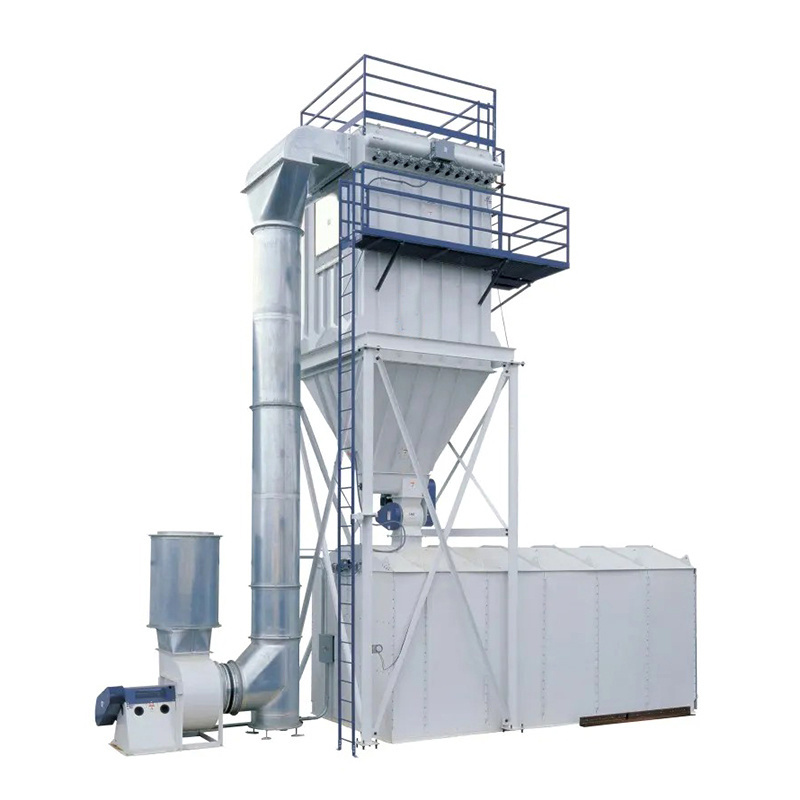
Famous pulse jets have been utilized in various applications, from model rockets to large-scale industrial processes. Their simplicity and efficiency make them attractive for projects where weight and space are critical factors. In the realm of aerospace, pulse jets have historically been used in early jet-propelled vehicles and are still appreciated for their unique characteristics.
One of the most notable applications of pulse jets is in the field of sound and vibration experiments. Researchers have utilized these engines to study acoustic phenomena, as the pulsing nature of the jet creates distinct sound waves. Furthermore, pulse jets are often employed in experimental propulsion systems, providing a low-cost method for developing and testing new technologies.
Moreover, pulse jets have applications in the field of heating and drying processes. Industries that require rapid heating can benefit from the high-temperature exhaust gases produced by pulse jets. This makes them valuable in applications such as powder coating, where quick drying is essential.
Despite their advantages, pulse jets also come with certain limitations. Their noise levels tend to be significantly higher than traditional jet engines, which can be a drawback in residential or noise-sensitive areas. Additionally, the efficiency of pulse jets can be lower than that of continuous combustion engines, particularly at higher speeds.
Famous pulse jets embody a captivating blend of simplicity and effectiveness that has allowed them to find their place in various industries. By understanding the principles behind pulse jet technology, one can appreciate its potential applications and contributions to modern engineering challenges. Whether for propulsion, heating, or acoustic research, pulse jets continue to be an area of interest for engineers and researchers alike.
Key words:
Related BLOG

Contact Us
Contact:
Gabrielle Zhang
E-Mail:
WhatsApp:
+86-19398142392
Mobile:
Address:
North of Jiaozhou West Road, East of Xuanzhou Road, Jiaozhou City, Qingdao City, Shandong Province, China